After deciding the puzzles in Task 2.1 – Puzzles and the narrative in Task 2.2 – Narrative, we decided to move onto discussing the environment layout. To begin with, I suggested that we make a list of the different game areas to ensure that we incorporate all of them in the environment layout. I also decided to list the props that appear in each area (if applicable).
List of Game Areas
Frog Pond Area (frog, berry bush, above-ground waterfall)
Lotus Plant Pond (lotus lantern)
Rhino Area (cliff, special flower, grave)
Swamp (creature)
Crystal Cave
Spikes Area
Ruined Birds Nest (bird)
Mushroom Farm (above ground)
Mushroom Farm (below ground)
Fog Area (underground area entrance)
Sakura Tree (spider)
Wind Plant
Underground Waterfall
Snake Burrow (turtle shell)
Snake & Skunk Area
Next, we divided the areas into three sections – above ground, below ground and underground – as a method of deciding on the distribution of the different areas in regards to the three environment levels.
Above ground
Frog Pond Area (frog, berry bush, above-ground waterfall)
Sakura Tree
Wind Plant
Ruined Birds Nest
Mushroom Farm (above ground)
Rhino Area (cliff, special flower, grave)
Snake & Skunk Area
Fog Area (underground area entrance)
Below Ground
Mushroom Farm (below ground)
Snake Burrow (turtle shell)
Underground
Crystal Cave
Spikes Area
Swamp
Underground Waterfall
Shown below is the rough draft of the environment layout.
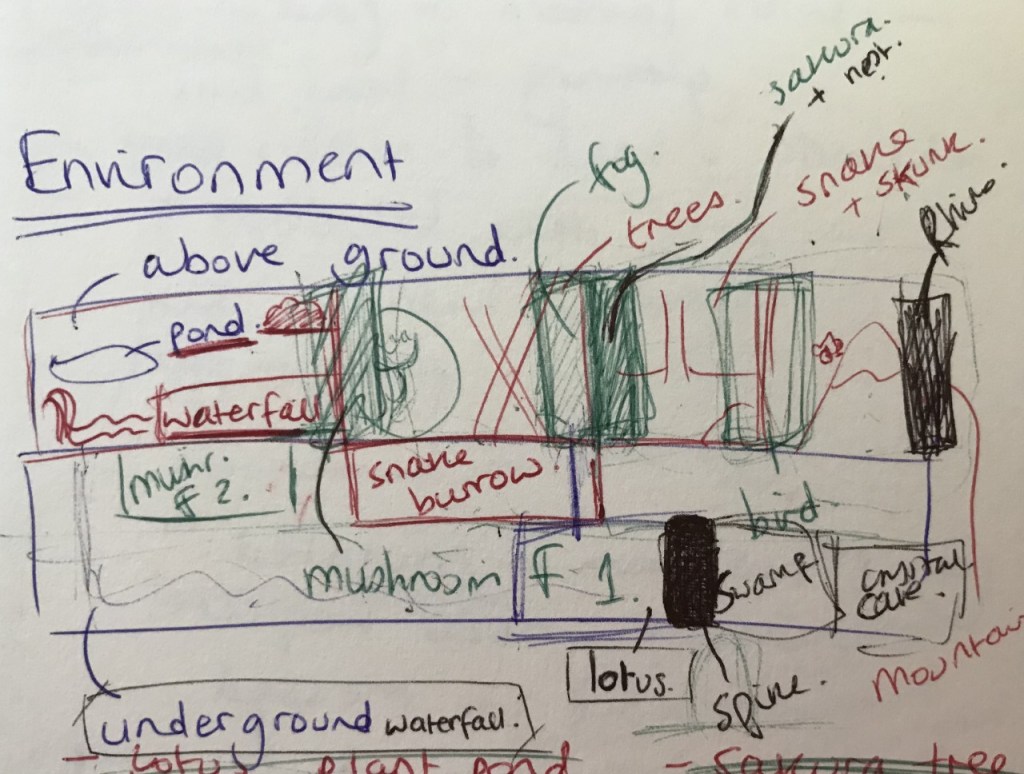
After roughly drafting out the environment layout using both text and diagrams, I decided to draw out a visual version of the environment layout. During this process, we began deciding more clearly on the placement of props/areas in terms of spacial awareness and the order of appearance.
Shown below is the draft of the environment layout in visual form.

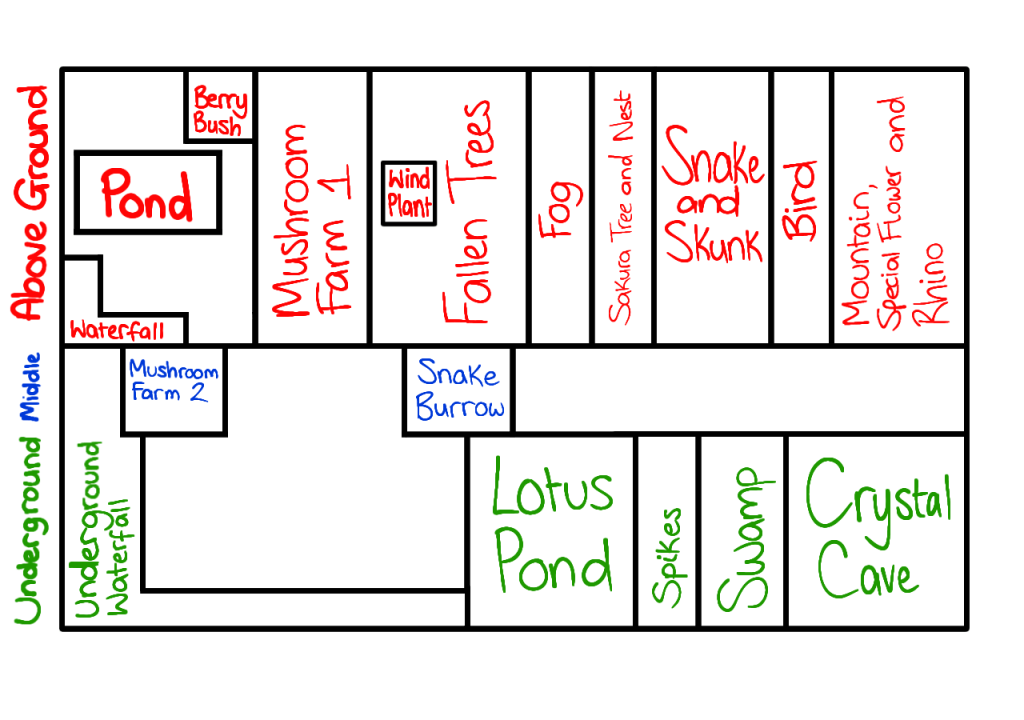
After drawing out the environment visually, I created a neater and more finalised version of the environment layout in text form.
Shown below is the final environment layout.
 Eden: A Muntjac's Tale
Leave a comment