After deciding the puzzles in Task 2.1 – Puzzles, we moved onto discussing the narrative and how we could integrate elements of storytelling into the puzzles/characters to make for a more cohesive and immersive gaming experience. We wanted the narrative to either be portrayed through environmental storytelling or dialogue since the game since the game didn’t have a narration system.
Furthermore, the game was supposed to be art-heavy as opposed to story-heavy so the narrative had to be light and not too plentiful.
Creating the Narrative
In order to be thorough, we decided to go through each quest individually and add bits of narrative to each one. We picked out some key elements from the quests and discussed how we could add depth to them as a method of creating narrative for the quests. Additionally, we also decided what things we needed explanations for and discussed ways in which we could explain them.
Main Quests
Flies Quest
Firstly, we chose the elements we thought could use some narrative from the quest. The elements we chose were the frog and the spider since they were also game characters – they would benefit from having some narrative background so that their dialogue would have something to base itself on. It would also make the player experience more immersive if the game’s characters had some depth to their personality.
Additionally, we already had some criteria for the frog and spider’s personalities we could use as foundations for creating their narrative.
Criteria:
The frog should have a bad personality to make the player want to kill it.
The spider had to have a good personality to deter the player from any murderous intents.
The frog doesn’t want to leave its pond
The spider doesn’t want to leave its web
Frog:
We decided to create the narrative for the frog first as it was the first character the player would encounter in the game. Since the frog was supposed to refuse to leave its pond, we first discussed ideas for why the frog wouldn’t want to leave its pond.
I suggested that the reason would be because the frog is an old frog who has been around since before mutations started occurring, and it hates the new mutated world. It wants to avoid any mutated animals so it doesn’t leave its pond. It would also have to be in denial about its own mutations if this was the case since the frog is also supposed to be a mutated animal. This additional aspect suited the concept of an old, stubborn and prejudiced frog so we decided that the idea was a sound one. These character traits could also explain why the frog has a bad personality.
Spider:
For the spider, we needed a reason for why it would refuse to leave its web. I suggested that it could be because it’s scared of the tiger destroying its web again – since the tiger is supposed to be terrorising the forest and destroying habitats, the idea suits the game’s existing lore. The spider could have had an old web, which was destroyed by the tiger once it had left it unattended. Now, it is paranoid because it thinks if it leaves its web, the tiger will destroy its home yet again. These feelings could easily be shown through dialogue so it was a sound concept to go with.
Additionally, we also needed to explain why the spider would want a flower. It didn’t make sense for the spider to want a flower to eat so we ruled out hunger as a reason. We discussed some more and decided that we should tie the reason into its existing backstory. We theorised that the spider could want the flower simply to brighten its day in the dark times it’s currently facing due to the tiger’s presence in the forest. The notion suited the spider’s gentle nature so we decided to take the idea forward.
Hidden Area Quest
Since this was such a small quest, we didn’t want to attribute too much narrative to it – it was an unnecessary task. Therefore, we decided to keep this quest’s narrative solely to some environmental storytelling.
Firstly, we thought we could hint at the reason behind the fallen trees’ existence. We thought that attributing it to the tiger would be a reasonable notion to go with. Next, we discussed ways in which we could hint at the tiger having been there at the scene. We talked about using tiger claw marks would be a good method of implying the tiger’s presence – they could appear on the trees’ bark.
Furthermore, I suggested that we make one of the trees into a habitat to showcase a destroyed habitat in the game. This would further display to the viewer the amount of havoc the tiger has caused in the forest. I stated that we could insinuate that one of the trees was once a habitat by making the tree have a hole in it that was overflowing with nuts. This would imply that a squirrel once lived there.
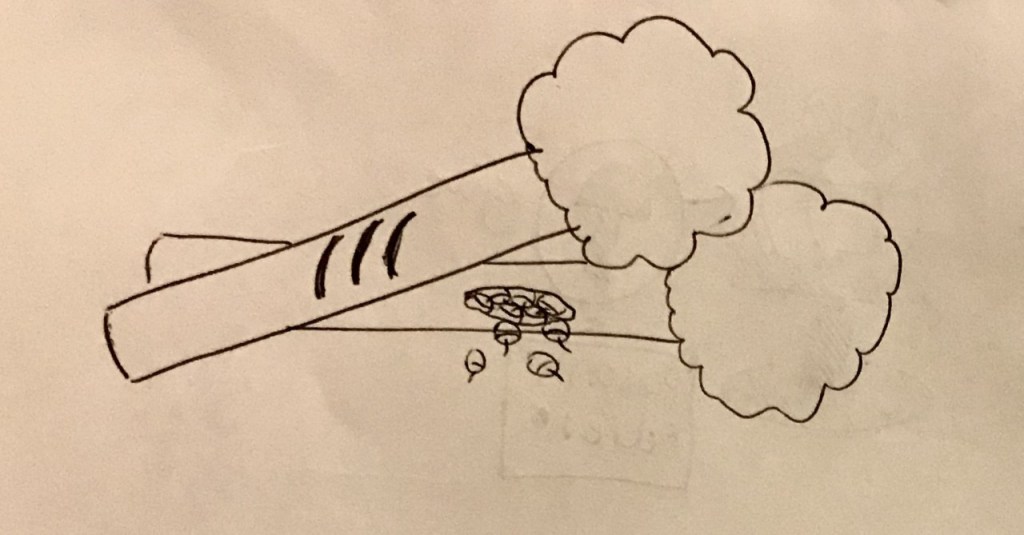
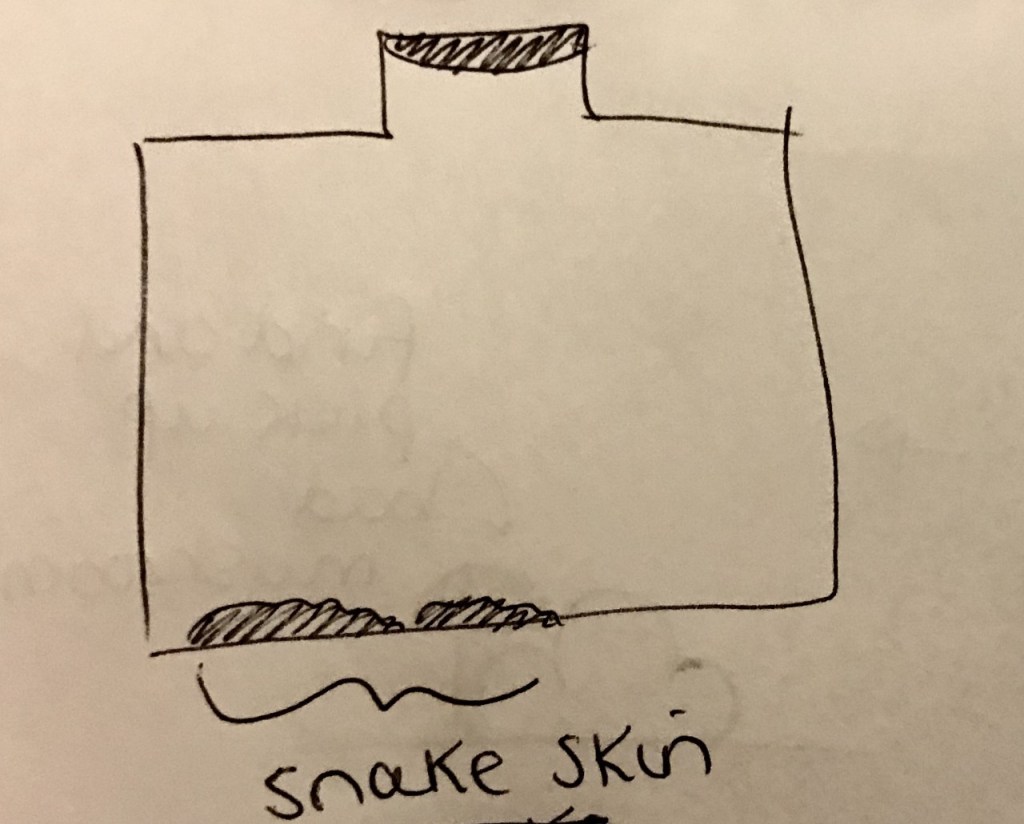
Additionally, we thought we could add some environmental storytelling to the snake burrow by placing some snake skin that had been shed in the burrow – this would imply that the burrow used to belong to the snake but has now been abandoned.
Snake Quest
The key elements we picked to attribute narrative to were the snake and the skunk, since they were the two characters involved in this quest.
Snake:
The snake’s narrative didn’t need to have much depth as it didn’t have any dialogue so its narrative could only be implied through visual clues. Therefore, we decided to keep its narrative short and simple. We only needed to discuss the reason for why the snake was sleeping on the path, which was partially covered in the ‘hidden area quest’ narrative discussion. We just chose to elaborate on the existing narrative – the snake’s old habitat (the snake burrow) was destroyed by the tiger so the snake no longer has a home to sleep in. This is why it is sleeping on the path.

Skunk:
Part of the skunk’s background has already been established in Task 2.1 – Puzzles. The reason the skunk is scared of the deer after it wears the seaweed is because the seaweed makes the deer look like it has stripes – this reminds the skunk of the tiger. The only thing we had to further discuss in regards to the skunk was the reason for why it was hiding in the first place. We decided to go with a simple, reasonable answer – the skunk is hiding from the tiger. The skunk’s narrative didn’t need to be too extensive as it didn’t have any dialogue that could showcase its narrative so we kept it brief.
Fog Quest
For the fog quest, we wanted to keep the narrative simple as there was no dialogue involved so its narrative could only be shown through visual clues/environmental storytelling.
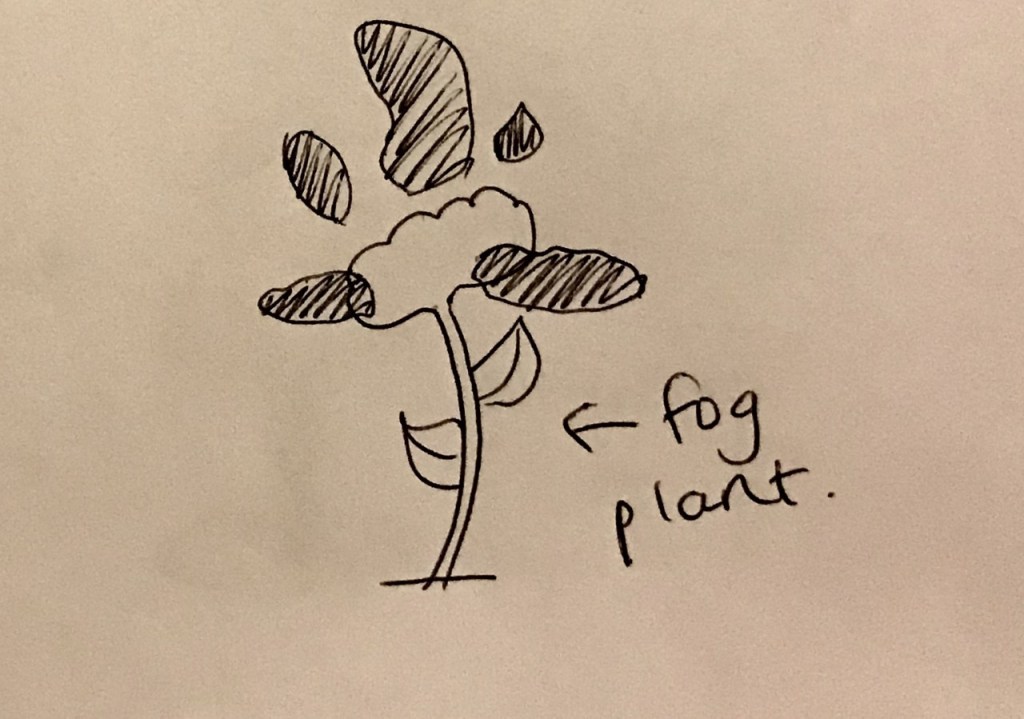
We decided that the only narrative element we needed to discuss was the reason behind the fog’s existence. We chose to keep this answer simple and create a ‘fog plant’ that creates fog just as the ‘wind plant’ creates wind – this logic follows the existing laws of the game world. However, we thought that this explanation wasn’t sufficient as it didn’t explain why there was such a large body of fog in only one area of the game world – surely a single plant could not be the cause for this.
After some discussion, I suggested that the fog could have been created by a mutated animal that had been sleeping in the area – it had been exhaling large amounts of fog continuously in its sleep. Furthermore, the animal could have eaten a lot of fog plants so that it mutated to have multiple orifices that exuded fog. These notions could account for the thick fog that covers the area. Additionally, fog plants could be scattered throughout the game to make the player aware of its existence – the fog plants could have a small fog surrounding them to explain how much fog one usually emits.
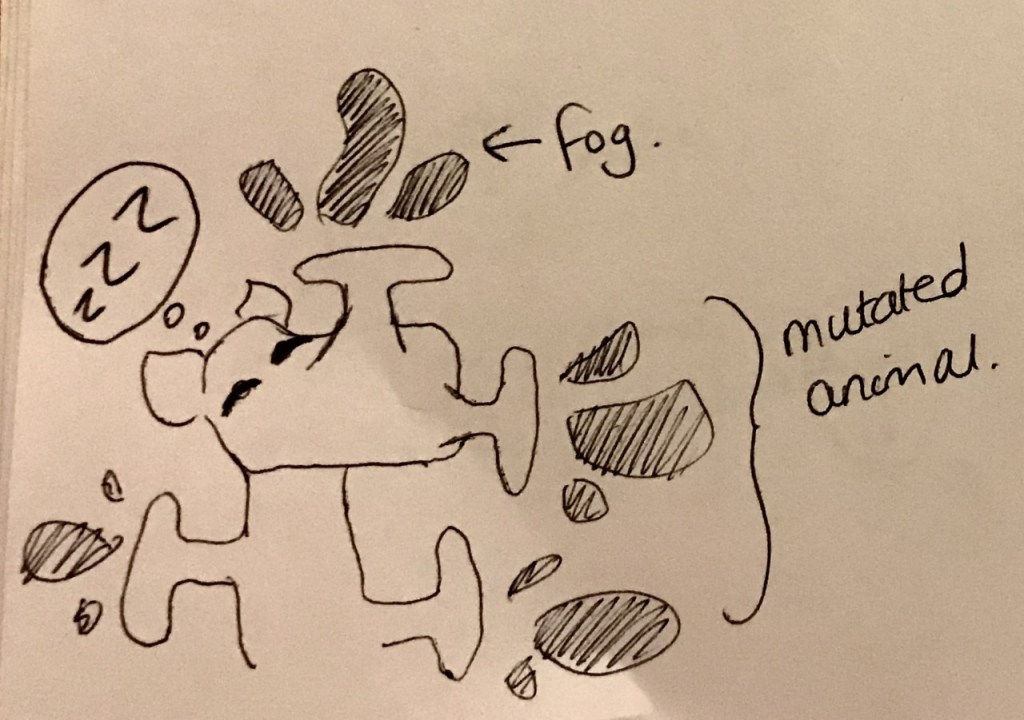
We also discussed what would happen after the fog is cleared by the wind plant – we would have to get rid of the mutated animal to stop the fog from coming back. I suggested that we could just have the animal wake up from the wind and run away soon after.
Plant Quest
For this quest, we needed an explanation for why the frog asks the deer for the impossible. We decided that the frog knows that the task is impossible and wishes to trick the deer out of a simple desire to make another suffer from frustration. This notion supports the frog’s bad personality.
Next, we discussed what the frog’s feelings would be when the deer gives it the fake flower, which it assumes is the real flower. We decided that it could be a moment of redemption for the frog’s character – this could be a way of showing the player that the frog isn’t that bad after all since they are supposed to befriend it. We decided that the frog could feel awe and touched that the deer would to such lengths to get it the flower – the frog reluctantly feels bad about its rude attitude.
Smaller Quests
Since these quests were short and simple quests, we decided to make their narratives equally short and simple.
Bird Quest
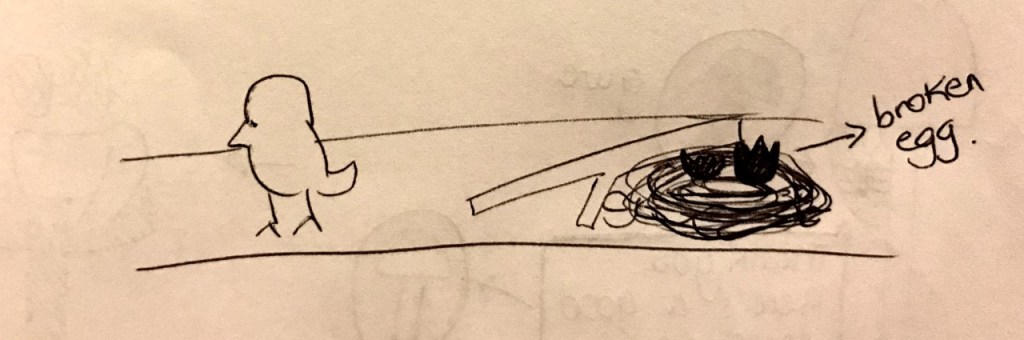
For the bird quest, we just needed a reason for why the bird is apart from its mother. We discussed how we could imply a narrative through environmental storytelling in this quest. I suggested that we have the bird appear near a broken branch, which has a ruined birds nest next to it. This would imply that the bird’s home was destroyed and thus, was currently homeless.
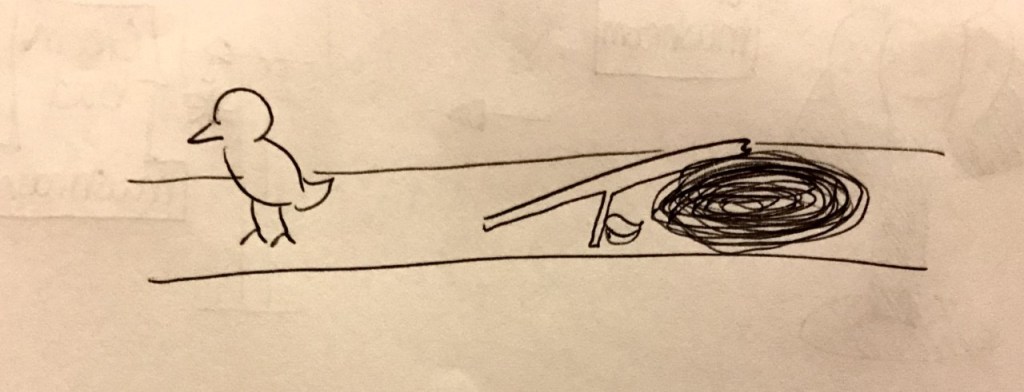
However, this didn’t explain why it had been separated from its mother – surely its mother would either have taken the bird with her or the bird would have followed her when she had left. After some discussion, we decided to make the bird a baby bird that was newly hatched – it had hatched after the mother had left. This meant that the bird couldn’t have followed its mother or been taken by its mother when she left. In order to showcase this, we decided to place a broken egg in the ruined birds nest to suggest that the bird had recently hatched from it.
Rhino Quest
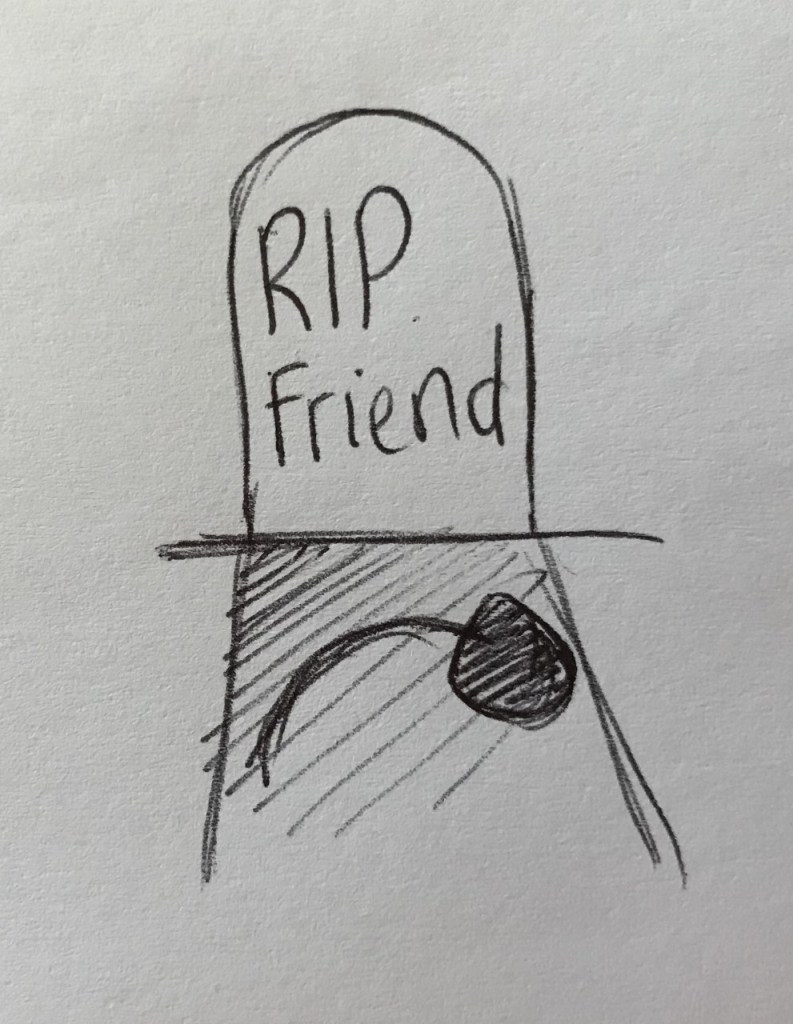
For the rhino quest, we needed to create a reason for why it is trying to play a tune with the bell flowers. I suggested that the song could be for the rhino’s late friend, who had loved that song and used to sing it for the rhino. As an example, I made the friend a bird since birds were known for singing. This notion could be shown by placing a gravestone near where the rhino resides and having the rhino look at it to show its significance. The bird friend could’ve also loved bell flowers, which explains why it is buried near some and why the rhino is specifically trying to play bell flowers. To signify this, there could be a bell flower on the the bird friend’s grave.
We also discussed how we could show the player what tune to play since they needed to help show the rhino how to play it. We theorised that it would make sense for the bird friend’s song to be a tune its species if known for singing. Some of these birds could be scattered throughout the game, singing the tune periodically.
Crystal Quest
For the crystal quest, we only had to explain why the crystals were dim. We decided to keep it simple and attribute it to the tiger trying to destroy the cave. We could have claw-marks appear on the cave walls (interior and/or exterior) to imply this.
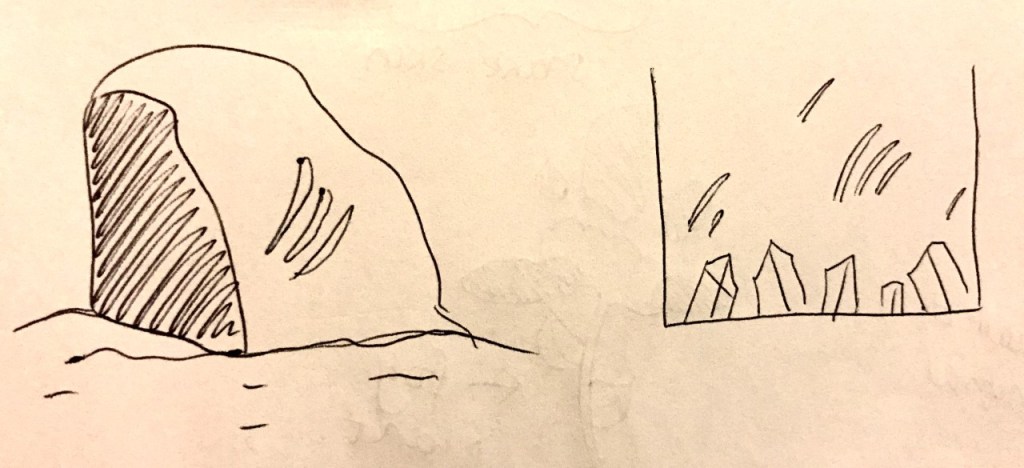
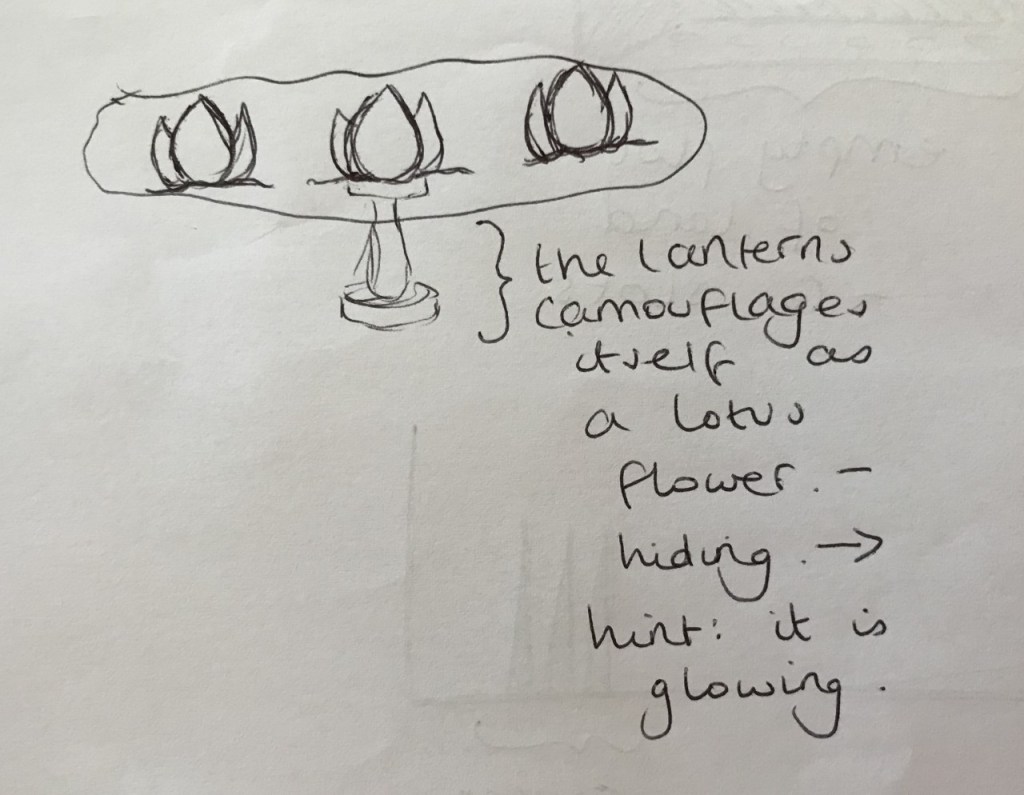
Additionally, we decided to further elaborate on the lotus lantern. We thought we could make the lantern camouflage itself in a lotus pond so that it looks like a normal lotus flower – its bottom flower is hidden underwater. As a method of implying to the player which lotus is the lantern, we could have the lantern glow periodically.
Mushroom Farm Quest
For the mushroom farm quest, we needed to explain why a bunch of carnivores had taken over a mushroom farm. I suggested that it could be due to the carnivores having mutated to want/need mushrooms in their diet. This would ruin the ecosystem and create too high a demand for mushrooms for the forest to be able to satisfy it. This could be shown through the carnivores’ mutated appearances.
Since the carnivores are bigger and more threatening, the smaller animals that also eat mushrooms are too afraid to go near the mushroom farm – this means they now lack a supply of mushrooms. This could be implied by having the smaller animals hide near the mushroom farm and look at the mushrooms forlornly. This is why the player needs to help them create a new mushroom farm in the hole. We made the new farm appear down a hole since we needed a way of preventing the carnivores from taking over the new farm.
 Eden: A Muntjac's Tale
Leave a comment